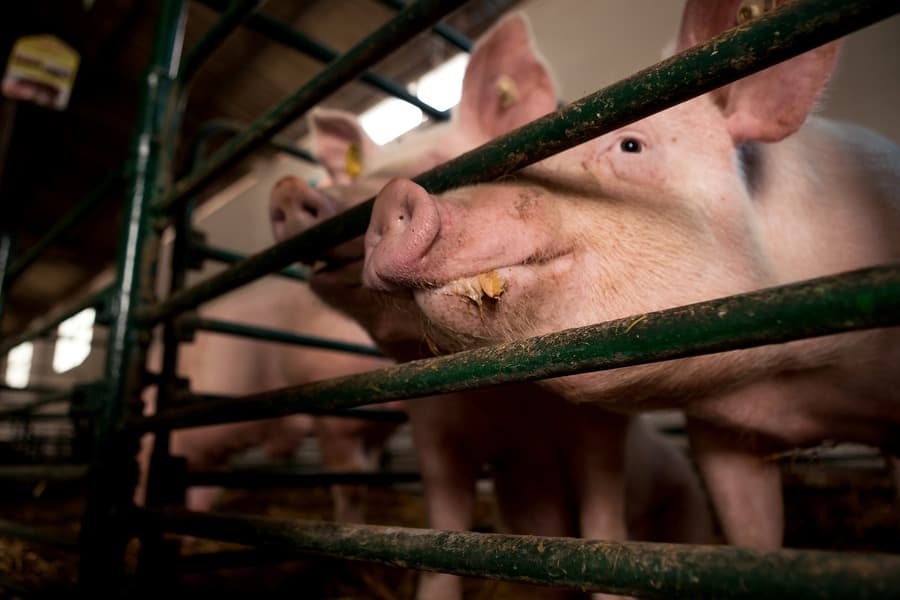
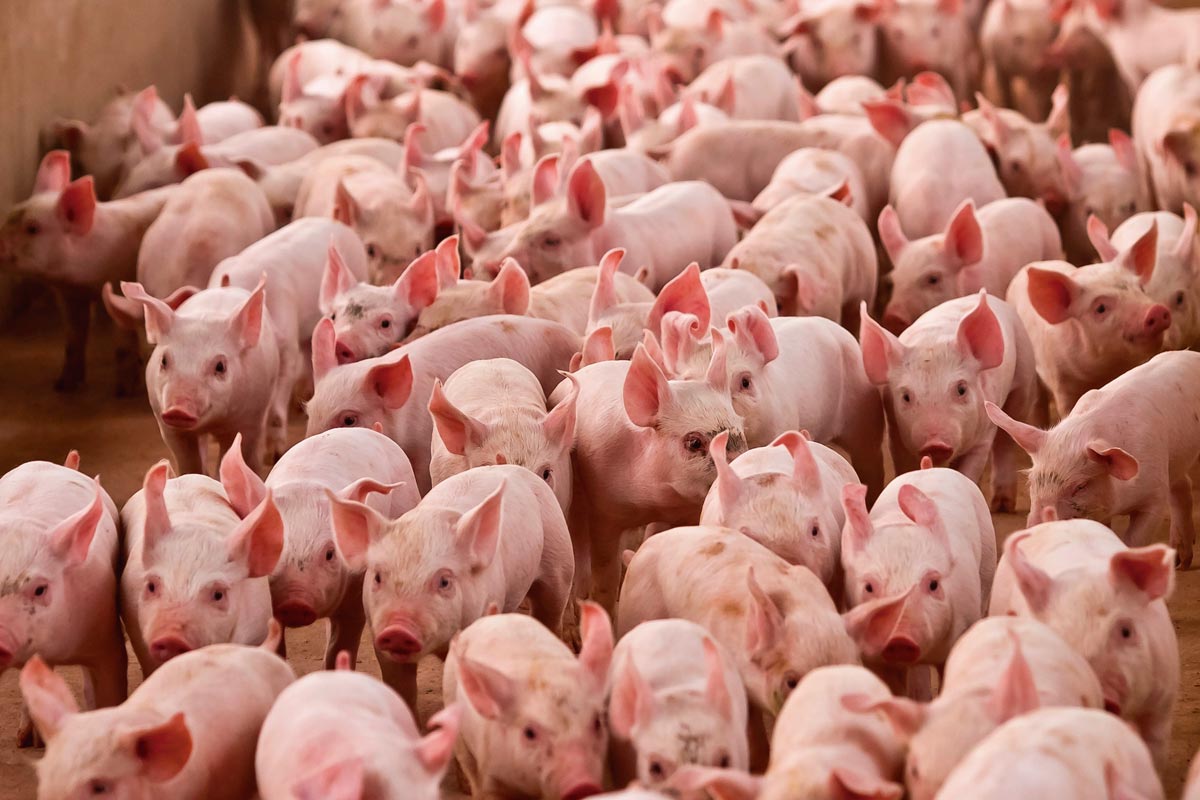
Porto Alegre, July 29, 2026 – The year 2026 has been imposing new challenges on the Brazilian swine industry. Following a highly favorable scenario in 2024 and especially in 2025, when producers benefited from high hog prices and favorable exchange ratios against the main feed inputs, data from the first months of the year show a gradual deterioration in production margins. In addition to the decline in live hog prices and the weakening of purchasing power in relation to inputs, the increase in domestic pork availability has emerged as an important factor placing pressure on the market.
The main concern lies in the sharp decline in live hog prices. In the Center-South market, the average price began January at R$ 7.72/kg, maintaining the high level observed in the previous year. However, over the following months, prices followed a continuous downward trend, reaching R$ 5.21/kg in July, according to preliminary data. The accumulated decline exceeds 30% over the period, significantly reducing farm revenues and placing pressure on the economic sustainability of the activity.
The problem is not limited to the reduction in the price received by producers. Exchange ratios, which measure hog farmers’ purchasing power in relation to the inputs used in animal feed, also weakened. The hog-to-corn exchange ratio fell from 7.06 in January to 5.16 in July. In practical terms, this means that the sale of one kilogram of live hog now allows producers to purchase an increasingly smaller quantity of corn, the main component of feed.
A similar movement can be observed in the exchange ratio with soybean meal. The indicator declined from 4.34 in January to 3.18 in July, demonstrating a loss of purchasing power in relation to another essential feed ingredient. Although current levels remain above those recorded during the cost crisis of 2021 and 2022, the downward trend raises a warning signal for the sector.
Another factor helping to explain the more difficult environment faced by producers in 2026 is the increase in pork supply. Production data show accumulated growth of 2.9% in the first half of the year compared with the same period in 2025, rising from 2.70 million to 2.78 million metric tons. March stood out, with production reaching 491,000 metric tons, a volume 8.7% higher than that recorded in the same month of the previous year.
Although exports performed positively, with accumulated growth of 10.8% between January and June and shipments totaling 771,600 metric tons, the increase in external demand was not sufficient to fully absorb the rise in production. In practice, this means that the domestic market continues to receive a significant volume of product. In some months, this availability was even higher than in the previous year. In February, for example, there was an increase of 3.6%, while in June domestic availability rose by 4.0% year over year. This larger volume of pork offered to consumers helps limit more consistent recoveries in live hog prices and is being absorbed in a highly challenging demand environment. In addition to greater pork availability, domestic consumption faces strong competition from chicken meat, which continues to be offered at highly competitive prices and is often more affordable for Brazilian household budgets.
This is compounded by a difficult economic environment, marked by inflationary pressure on the cost of living and high levels of household indebtedness and delinquency, factors that reduce consumer purchasing power and limit the consumption of higher-value proteins. Another important aspect is that retail pork prices have not declined with the same intensity observed in the wholesale market and throughout the production chain.
The scenario becomes even more complex when considering that the activity is already operating with deteriorated margins, which are negative in many cases across several regions of the country. Production costs remain high, operating expenses have increased, constant investments in biosecurity are required, and volatility in domestic and international markets heightens producers’ perception of risk. Therefore, even with exports growing, available supply remains high and limits the potential recovery in prices paid to hog farmers.
The data show that the excellent conditions experienced by the swine industry in 2025 are unlikely to be repeated in 2026. Last year, live hog prices remained above R$ 7.40/kg in every month and reached R$ 8.16/kg in September, while exchange ratios with corn and soybean meal reached some of the highest levels in the historical series. Within this context, producers with better zootechnical management, productivity gains, and more efficient commercial strategies are likely to face the period with greater resilience.
The evolution of exports, domestic demand, and the balance between production and consumption will be decisive in determining whether the sector will be able to recover part of the margins lost during the second half of the year.